“I don’t feel lucky,” I said.
“You will, eventually.”
“When?”
“Soon.”
I start to cry. I want to tell the man on the phone how difficult this is. I can hear him crunching chips. I wonder what made him want to work a Saturday night in July at a suicide hotline. I imagine him in a recliner. Maybe a ponytail.
I’ve felt, since March, like a galaxy slowly dying. With each look, the edges fade, change, implode. A long shadow of dead stars covering everything. But, no one was looking. Or, I was good at hiding, and I had to hide, and since then I’ve stayed hidden. It’s two days before my thirty-fifth birthday and I feel hopeless. My ex has written me an email: “I’m moving on. I met someone and am falling in love again.” I imagine her blonde. He always had a thing for blondes even though we dated for years and I am brunette. He used to stare at blonde women when we went out. He would stare in that way, how some men like to triangulate your affection for them, bounce it off other women.
The end of the five-year-long relationship was like losing consciousness. Moments of lucidity where we begged, and cried, and promised one another things we were incapable of, and nights so angry, so tense, I wasn’t sure I’d get to the morning. Rage, and hot sadness, days of screaming and days of cold star silence commenced. It was hard to believe even a few months removed from it what had really transpired between us.
I dig my fingers into the cracks of the cool leather sofa. The voice on the phone tells me: “Make a safety plan.” I don’t know what that is. I sound the words out SAAAYYF-T-PLAAAN in my head.
I remember my lifeguard training, my wet, sixteen-year-old self, dragging a boy I was moderately attracted to out of the deep end. I didn’t struggle to rescue him, to rescue others, but I didn’t want to be rescued. “Now switch. You have to practice rescuing each other,” the moderator said, so I dove down to the very bottom of the pool, fourteen feet, and froze there for him to rescue me. At the bottom of the pool, time couldn’t touch me. I opened my eyes, so I could see him dive in. Chlorine stinging. His blurry body pulsed closer and closer. Then he grabbed me. I rag-dolled, as instructed. My swimsuit was modest, but my breasts still bulged out the top as he pulled me to the surface. He pulled me to the side of the pool as I continued to pretend to be unconscious. At the surface, I closed my eyes. I didn’t want to see myself get rescued. It was embarrassing. Why is asking for help so difficult? Why can’t we save ourselves? I didn’t want to imagine needing rescuing. He pulled my teenage body out of the water with force and laid me on the concrete. That’s the last time I remember being saved. At thirty-five, I want someone to yank me out of my life, just like that.
Make a safety plan.
“You need a place you can go to feel safe when he threatens you. A place he doesn’t know about.” I imagine a secret panel wall or chamber that opens up like in a children’s book. A hidey-hole. A hidden left side to my apartment. A place with animal crackers and books. I think about the woods behind my apartment. They link to a baseball field and graveyard, but I’ve never been scared of the woods, or graveyards. If I had to spend a night there I could. Fear, something I’m always recalibrating my relationship to, since I met Adam.
An early memory: walking a pier at Sunset Beach in North Carolina with my mother. A sundress batting at my legs. We would walk the pier to see what the fishermen had caught. My mother pointed out the fishermen leaning like felled trees against the railings—their day’s catch swimming or dying in buckets beside them. The odor of rotting guts and fishy salt stink. One man had caught a large stingray, about three feet across, and it lay flat and flush on the wooden beams, dead and stone-colored. I was scared but wanted to get closer. My mom held my hand as I inched closer—its skin smooth like a freshly painted car, lacquer-coated candy. The wet ridge down the spine culminated in its pointed tail. Closer, closer— until I got so close, I slipped and fell onto it. My body hit the fish’s body in a cold suck-smack sound. I shrieked, scrambling on top of the cold flesh. Wetness. Its body is spongy and giving way to mine. That’s the first time I remember being pulled to something that scared me. Adam is the last time I remember being attracted to something that scared me.
The suicide hotline volunteer is telling me jokes now, but I’m not laughing. I am drifting. Disassociating. But I’m still answering his questions to keep the connection.
“Why did the pig have ink all over its face?”
“I dunno, why?”
“Because it just came out of its pen,” he answers. Pen.
“I’m a writer.”
“Yeah?”
“Yeah.”
“Then open your pen, and write about it.”
—
We’d stumble, charged from the bar down the street to my little apartment off Van Vorst street in Utica, NY because we were eating the food of love. Every night that summer we arrived home, feet throbbing, heads high, laughing, pushing, kissing each other into the doorways at 3, 3:30, 4 a.m. The spring Adam and I met was electric, literally, lighting raged like I’d never experienced before, and haven’t since. We wouldn’t even go out until midnight. I’d putter around the house, vaguely writing or cleaning, talking on the phone, gazing out the windows at the May storms that bloomed into June storms that gave way to a July where steam rose off the streets in the morning.
The lightning storms wouldn’t stop. Every afternoon gushes of rain sloshed the streets as cars crept by and lightning would crack up the sky sectioning it, cutting it up. I’d been hibernating for months feeling unworthy of connection, like if I connected with someone else it would only end in disaster, hurt, disappointment. I’d moved to a new city as an assistant professor of English on a contract where I knew no one. The one person I’d tried to date, a colleague, dumped me for a student. I was so humiliated by his choice that I responded by isolating myself completely. Whatever social gatherings I was normally invited to, she became his plus one, and I was alone in my apartment all week every week, and all weekend, every weekend. I stopped eating for a bit, something I’d never done before. I experimented with my own hunger. So self-conscious about my own needs, how he didn’t want to meet them, I wanted to learn to have none, eating included.
In the middle of this self-loathing I ended up at a sports bar across from the train station drinking alone at midday. When I approached people they were mean and rude, often making fun of me to my face, accusing me of interrupting their good time. People’s unfriendliness, a symptom of how hard it was to live there. Like most of Central New York, it was a city where industry left long ago, where winter was eight months a year, where hardly any outsiders came through. The struggle to survive meant there was little room for new people in anyone’s life. I asked the older man next to me who looked like he’d been pickling himself for years what he thought the meaning of life was, and as the TVs played football, he took the salt and pepper shakers and put them in front of me: “This is a person, and this is a person,” holding up each shaker, and slamming them on the bar. Then, after a thoughtful moment, without warning, he slowly pushed them towards each other until they touched, and looked at me.
“That’s the meaning of life?” I stared at the salt touching the pepper, “Touching someone else?” “Sometimes,” the man shrugged.
Snow fell on top of snow all winter, like nothing I’d ever seen before. So much silence. So much stillness.
I prayed for change.
That’s when Adam appeared.
—
Adam was in the corner of the bar in a bright orange sweatshirt with the hood covering his head, stooped over a beer. He walked out of the bar to smoke and I followed. I got the courage to talk after many nights of sitting alone. On the street, the lightning cracked while I introduced myself to Adam. He was brisk, skeptical. I could tell he was trying not to get close, he wasn’t too friendly, he was trying to figure out what I wanted from him like everyone else in this Central New York city. Everyone I’d met so far thought I was full of shit or crazy because I was so friendly. There was a closedness about the people there. His lanky frame, gray-green eyes, and red hair drew me in. I kept stepping closer. Eventually, he cracked. “You’re not from Utica are you?”
“No, I’m not,” I said eagerly.
“I can tell,” he smirked.
Then one by one all the lights on the street went out.
We stopped our chit-chat and blinked at each other in the new dark. Lightning had struck down the block.
“Does that usually happen?” I asked?
“No, that actually never happens” Adam answered.
Lightning is caused by an imbalance. Either between the ground and the atmosphere, or within the clouds themselves. Relationships too are about balance, something I still didn’t know much about. But I was curious about this man, opening toward me, moment by moment showing me who he was, or who he wanted me to think he was; funny, deeply charismatic, outgoing, handsome. Later, as I got to know him, his high-pitched laughter was unmistakable, and when he leaned into me, held my hand, or touched my back I felt finally accepted by someone after so much humiliation, so much rejection. Nothing I said or did upset or repelled him, unlike other people I’d dated, who’d made me feel like I wasn’t exactly what they were looking for. Adam made me feel like he had won, until he didn’t.
A flirtatious text. A silly movie quote from Back to the Future. “You are my density, I mean, destiny,” he texted me later that week after we exchanged numbers. A few weeks later, he was in my bed. I watched him, his eyes closed, his breaths deep. He looked like something that was about to evolve, a caterpillar or an egg cracking. I could feel myself changing too. “You’re precious to me,” I’d whispered, moving my body closer to his.
I didn’t know it then, but he wasn’t single. This is something I wouldn’t find out until almost a year after we started dating. I thought it was strange he never wanted to hang outside my apartment, but I’d thought he was just intent on getting to know me, and he valued the time we spent alone. It took him two months after we met to break up with his then-girlfriend and move all his stuff out of her house. I had no idea any of this was happening. By the time I found out a year later, we were so bonded from all the nights we spent in my apartment, just us, getting to know one another, I didn’t care. He’d told me many stories about their difficult relationship. He often painted her as unstable. I had assumed he’d done everything he could, but he hadn’t he’d leapt from her to me—a pattern he’d continue to repeat at the end of our relationship. Lining women up to jump to like a safety raft. Women were his safety plan.
—
There were issues, but I was so lonely. The first time we had a fight he ran out of my apartment, got in his car and drove away. I waited for him to come back for hours. I texted him with no response. Called and no response. When he came back in the middle of the night, he was wasted. I was terrified he’d been driving that drunk. He could have killed someone, hurt someone, hurt himself. When he came back he went straight to bed and passed out. I’d never had a fight like this. His mother had been diagnosed with breast cancer a week before. When I called a friend about it a few days later she asked if it was in response to the diagnosis. Maybe, I’d said. I was always coming up with reasons and excuses. I didn’t want to see what was really unfolding: my boyfriend had a deep addiction to alcohol due to roiling emotions with few coping skills, and he wasn’t capable of worrying about if he hurt himself or others.
“You can’t run away when we fight,” I said to him the next day. We set boundaries and rules. Ones that would not be kept. It was hard to stay angry with him because I loved him so much, and he always said he would try harder. We moved him into my apartment within the first year we’d been dating. He was living with his mother, and I had space, and I loved him. Adam worked part-time pumping gas and waiting tables. He’d barely graduated high school because of behavioral problems. He was smart, but struggled with motivation. He was a wild teenager, sneaking out to go to raves while his parents’ divorce quickly brought his parents from middle-class to struggling. Adam was the last of five kids, often used as an emotional pawn by his parents to get back at one another. When we met, Adam wasn’t on speaking terms with his father and hadn’t been for years. Adam had done some work for him, which his father didn’t find satisfactory and refused to pay him. Adam stormed out of his house and did not look back. It had been almost eight years. His father lived down the street from my apartment. The first year we were together his father came up a lot. “Money isn’t worth all that,” I’d said. Sure enough, by the end of the year, they’d made up and we were visiting his father down the street.
The years we were together were hard. Adam’s mother and grandmother both got sick. First breast cancer, then stroke after stroke. We watched his mother become less and less herself. We spent many nights in the hospital. I still dream about standing next to him on his mother’s lawn, squeezing his arm. The complete shock and dismay on his face as the ambulance lights played on his cheeks. I held him many nights as we both cried. The cruelty of illness, the slow peeling back of people you love. The transformation of loved ones into balls of suffering. This happened to Adam too. His drinking dependency increased as we witnessed the painful deaths of the women in his family.
Adam took out the trash, left me little gifts, told me he loved me multiple times a day. Every day he told me that he was thinking of me, that he couldn’t wait to see me when we got home from work. He showed me off when we went out. He vouched for me, cracking the hard exterior of the local crowd, so I finally didn’t feel like an outsider. Our first snow together, he woke up earlier than me and got me a dozen white roses. When I walked into the kitchen they sat on the small table. I asked him why, and he kissed me on the cheek. “Winters are hard, but we have each other,” he’d said. Each year, a small gift on the first snow, a reminder we had one another even if things were tough in that small brutal city.
—
Adam was a vinyl D.J. We would go to parties, raves, and he’d stack crates of electronic records into his Subaru Outback for gigs. Each substance we took, ecstasy, molly, coke, LSD, ketamine, an exploration together, never getting too out of control, or so we told ourselves. Sometimes he’d get out on the dance floor and do liquid dances he’d taught himself in the ’90s. He moved his body in ways I’d never seen. He never had to practice his sets. He’d just get on stage and know where every record was, each crate, each sound. He knew how to physically blend sounds, old school. No one really spins vinyl sets anymore, they just don’t know how. He’d gained clout in his D.J. crew through his genuine talent, even though he often didn’t show up for anyone else’s sets because of his late nights waiting tables.
I missed one set in the five years we were together, and that was to attend a writing retreat. He called, wasted out of his mind. I knew on some level he felt threatened by the fact that I was focusing on my work, myself, and he didn’t want me to. He tried to tell me he was unable to pack the car by himself, and couldn’t find any of our camping gear.
“Can’t you come home?” He begged on the phone slurring his words.
He knew I couldn’t. I’d paid for the week.
He wanted to be the talent in the relationship. Or maybe he was afraid my writing would take me away from him. We wanted to leave Utica. Much of the five years we were together I spent on the academic job market, interviewing, traveling to conferences, busting my ass to try to get us out so he could have more job opportunities. Despite all my efforts, without a book, I’d get pretty far in interview rounds, but never a job offer. The last year of our relationship he said, “You didn’t try hard enough to get us out,” before throwing a six-pack of beer at the wall, missing my head by four inches.
—
It took a long time to break up with Adam. Our lives were intertwined, and it was such a small city, and there were many times I didn’t believe I had the strength. I asked him many times to stop drinking, go to therapy, to get help, and he never took any steps towards those things. All our mutual friends wanted us to be together. They thought we were happy. I started by getting an apartment in a neighboring town and not telling him where it was. It broke me financially to pay multiple rents, but I knew it was the only way to safely disengage from our relationship. I wasn’t sure who I was without the relationship, and I wasn’t sure if I had the fortitude to find out. Everyone I knew was connected to him. My entire social life, half the city. I moved a sleeping bag, a toothbrush, and some clothes there. Any time we fought, I went there to keep separated from him because I was afraid if I stayed things would get more physical. The longer things went, the more stuff I moved, if he noticed, he didn’t say. We hadn’t told any one I had a secret place. At first he didn’t demand to know where it was, and didn’t follow me when I left. But once or twice when things were going well, he asked to know. I eventually caved and told him—I even gave him a key, though I knew it was the exact thing I wasn’t supposed to do. I kept hoping he would get into therapy, get into a program, stop drinking, take responsibility for his emotions. Adam hadn’t had things easy, and I wanted very much for him to get help, to feel seen, and to feel loved. But the more he drank, the more addiction took ahold of him, the more that dream of stability and love and living a good and simple life together seemed impossible. One night he showed up raging drunk to my apartment, stood over my bed, and called me a piece of human garbage over, and over, and over again, until I sat up and screamed. Once I opened my mouth to finally scream, I couldn’t close it. I’d had enough. I pulled all the stars out of the sky. A door inside me opened and accessed all the parts of me that had stayed quiet and numb. My mouth, a black hole of anger and pain. I said ungodly things and meant them. I told him to get out and never come back.
After I broke up with him, the death threats started. I wrote my mother, father, and brother an email late at night: “There have been times when I don’t feel safe.” Adam would go out every night partying, drinking until he was blacked out, picking up girls. What people didn’t see—he’d text me threats, “I HOPE YOU FUCKING DIE, YOU BITCH,” until 5 a.m. or 6 a.m.—even on nights he was sleeping with other women. Once they fell asleep, he’d contact me. I’d turn my phone off to try and sleep. Every night, I worried he would show up. For a while, he wouldn’t return the keys to my apartment. Those were the nights I worried most. Towards the end of our relationship, when he was around, my dog would nervously eat the carpet, something she’d never done before, and hasn’t done since. Once or twice I came home and she had swallowed parts of the rug. It made me think he’d been in or outside the apartment while I was gone.
Adam ran around and told everyone he was concerned about me while secretly harassing me. Fear nested. I knew my dog wouldn’t bark if he came in. She knew him. Our mutual friends didn’t understand why I moved to a neighboring town and defriended everyone on social media because according to him, I was crazy. I told my mom there were cops outside my apartment nightly when she told me she was worried. What I didn’t tell her was there was a good 450 feet from them to me, and whenever he texted me he wanted me to die, I thought about what could happen in the 450 feet from my door to the cop car. One night he texted, “HE’S GONNA FUCK YOU TO DEATH,” convinced a guy I barely knew, one of his friends, was in my apartment having sex with me: My face got hot. I turned off my phone and locked all the windows and doors. I paced. I was awake until dawn. I packed my lunch. I sat fully clothed in an armchair, wired, waiting until an acceptable time to get to work. The minutes ticked. I only have to make it through this day, I told myself. No one has to know my life is this small. And getting smaller.
There were many nights I couldn’t sleep, and I thought about how he mingled sex with death. How he imagined me dying from sex. I wondered if he imagined it during our sex. If he thought of our sex as violence, as something that might kill me, and that excited him. But part of me recognizes this, too. Maybe this is what disturbs me the most—a morsel of recognition. Sometimes I see death as a comfort—there’s an ending. Those nights every sound in my apartment would keep me awake. My neighbors worked night shifts. When their cars were five minutes early, or late, I would run to the windows and look out. Once, or twice, a car I didn’t recognize turned around in the driveway—the most terrifying three minutes of my life. The lights passed over me through the window like a laser beam baptism. I waited on my couch for a pounding on my door that didn’t come. In April, red foxes took up the snowy forest behind my apartment, and the vixens wailed at night. During the day I was teaching how setting can create mood and atmosphere. I’d write on the board, “It’s when the interior struggle of a character is illustrated in the setting.” At night, I was on my couch, receiving death threats at 3 a.m. Outside, the vixens were screaming.
That spring I taught Stephen King’s The Shining, alongside Kubrick’s adaptation. I told my students that fear and desire bloom on the same bush. “Have you ever had a crush so bad you were terrified to run into them? Have you ever been so scared standing at the edge of a mountain but had to inch closer?” Some students raise their hands and giggle.
We talk about Jack Torrance. How he saw his wife and child as a burden to his creativity. How he terrorized them to death. Wendy becomes a huge class discussion, first King’s interpretation of her; a woman so lonely, so emotionally isolated, she stayed with a man who broke her child’s arm and tried to convince her it wasn’t a big deal. King describes her giving birth to Danny as a loss. How she felt something was being taken from her core that she’d never get back. Danny’s individuality only underscored her loneliness. How threatened she felt by the connection her husband and son had. Jack Torrance is a writer, and Danny, his son, a psychic, is able to read him, pick literal words out of his head. Wendy is left outside the story entirely. She cannot read nor write the men in her family. She’s illiterate to their interiority.
Wendy longs for deep connection and feels intense jealousy around the natural connection Jack and Danny share. Little does she know the bond that Danny and Jack largely share is one of addiction, impulsivity, risk taking. She is easily sexually manipulated—the physical comfort, sex with Jack lulls her into submission. She is naive to believe Jack when he says things will be better out West, that he’s capable of change. She believes in Jack’s “work” right up to the very moment he tries to kill her.
Before the book even begins, Jack breaks his son’s arm after a night of drinking. The crack of Danny’s bone sounds an alarm of before and after. After the bone breaks everything changes. What becomes possible from that moment on is only more violence and Wendy’s already agreed to this before the book opens. We are told about her boundary in flashback, off-stage, and she only realized it was a boundary after her son’s arm was broken.
Kubrick’s Wendy, portrayed by Shelley Duvall, is less complex. Rumor has it Kubrick tortured Duvall in this role. Kubrick readily admitted to keeping the actress isolated and cutting many of her lines. Over half her dialogue are the words “Hun,” or “Jack.” She never quite has her own ideas. The famous scene where Wendy drags Jack to the freezer as a kind of make-shift jail (her first, and only attempt to really save herself and her son) Kubrick insisted Duvall perform for real, despite her petite stature. He berated her for a whole day until she finally broke down and told him she was on her period and not feeling well. Kubrick told her to go home, eat meat, sleep a lot, and come back in the morning to perform the physical task of dragging Jack Nicholson to the freezer. The fact that an abused fictional female character is played by a woman who then is abused while portraying her compounds the abuse. How many Wendy Torrances are there in the telling and retelling of The Shining? She seems to multiply as rapidly as any Jack. Jack Nicholson, while in this role was famously embroiled in his violent marriage with Anjelica Houston.
The class discusses in-depth the lady in the bathtub. The way the naked model claws back the curtain and rises like some UFO out of a lake at night. The naked female body; at once, so strange, and also, so familiar. Kubrick films a naked woman like a foreign object. Some new invention. And maybe this is how abusers see their victims; newborn and fascinating, and also ancient and all-powerful. Desire turns to fear in one instant. Desiring the things you fear, and fearing the things you desire, can create a powerful emotional and physiological cocktail in the human body and if you can inspire this confusion in an audience member it’s electrical. This is the basis of all horror films. This is also the basis of abuse.
—
Sometimes I think about all the men I had to tell about my ex-boyfriend in order to feel safe. Some were empathetic and some were not. I had to tell other men about this man who was threatening me and they got to assess if he’s unsafe or not. Not my fear, not my desire to be protected. Not my worry. All the men: the Director of Safety at the college I teach at; the Associate Dean; my brother; my father. I told two colleagues I was being stalked and harassed nightly for months on end. “Well, he’s upset,” they responded. “That’s normal.” I told a friend on the phone what I’ve been through. “I think a lot of relationships are like that,” she said. She might as well have said, “You’re not special. Your story isn’t even the worst I’ve ever heard.”
When we first got together, Adam used to tell me I made him feel like a real man. I never knew what this meant exactly, but when we broke up he told me I’d emasculated him. How can I have the power to create or destroy a man with my love? I’m a well for men to drink from and gain their own identity? A man I talked to about the situation told me, “A woman can destroy a man with one word.” She can? This is the first I’m hearing of it? As if access to me, my body, my love, my bank account was all it took to make someone a man and by taking myself away, I’d taken everything.
—
Adam and I lived in the county with the highest reported rates of domestic violence in New York State. I am steeped in a culture of “do nothing.” The story behind this statistic is more complex than it seems. Reported domestic violence is different from actual occurrences, meaning there’s more out there than reported due to a lack of reporting, but I wonder why the rates are higher than even in New York City if the population is much less. “Oneida County has the most reported cases of domestic violence in the state, and New York State has the most reported cases of domestic violence across the country… Domestic violence knows no economic or social boundary… it could be the wealthy doctor’s wife in New Hartford and it could be the homeless woman living under the bridge and it could be that young man working at Lowe’s. Honestly, it’s across the board, it’s terrible. It has no boundaries” (Rome Sentinel 2016). That word “boundary” pings off my skull like a penny at a state fair game. And then blooms the fear—abuse will find you, no matter where you are or who you are.
Another statistic looms over me: bisexual women are more likely to be victims of intimate partner violence, “New data from the Center for Disease Control and Prevention (CDC) shows that bisexual women experience significantly higher rates of rape, physical violence and/or stalking by an intimate partner compared to both lesbians and heterosexual women” (CDC 2010).
What these particular statistics and articles don’t state: if you’ve been in an abusive relationship, you may easily find yourself in another. Revictimization is not uncommon.
In the middle of our breakup, Christine Blasey Ford takes the stand in Senate judicial hearings to testify against the character of Brett Kavanaugh. Alone in my apartment, I listen to her testimony. I sit on my couch and I write her a thank you letter and put a stamp on it. In a few months Epstein will be in prison and then die of mysterious causes. Rose McGowen has already tweeted #YesAllWomen and many women have published essays detailing misogynistic gender-based violence against them. None of their stories look or sound quite like mine. I left before things got too physical. I am surrounded by a culture that claims to hear me, yet I am sitting in a city that does not care. I can feel the ground shifting. There are only so many stories the culture can hear before it goes numb to women’s struggles. Before I experienced it firsthand, I was numb to it too.
One evening in Flagstaff, Arizona, right before I moved back east to take the job in Utica where I’d meet Adam, I went to a club with some poets from my MFA program. Across the street we saw a man drag a woman down the sidewalk by her hair. She was on the ground, her black tube dress riding up; her feet bare and in one hand her high heels; her long dark hair in his hands like ink spilling through his grip. With her other hand she tried to hold her hair near the scalp to stop the pulling, but he kept dragging her. She was not crying out, he was not yelling. This made me think it had happened before. I couldn’t tell if they were whispering or talking or interacting at all, other than the dragging. Maybe it was the silence that enabled so many people exiting the club to walk by, not notice, or think nothing at all was wrong.
I stopped my friends and pointed. “What the fuck is going on over there?” I stopped walking.
“Holy shit.”
“We gotta do something,” I say. “STOP THAT RIGHT NOW!” I call out. The man stops dragging for a moment and looks up. He has dragged her out of the street light where we’d spotted them and into a shadow.
“I’M GONNA CALL THE FUCKING COPS IF YOU DON’T STOP THAT RIGHT NOW!”, One of the poets grabbed my arm and said, “Don’t. Stop. Sometimes getting involved like that will only make it worse for her.”
“What? What do you mean?” I looked at her.
“Trust me, I know, just stop.” She steered us towards the hotel. I thought about what she said for years. It haunted me. How much worse could it get?
—
If you tell people where your boundaries are and they are repeatedly ignored, trespassed, or negotiated, do you start to think there are no more boundaries—your boundaries don’t matter? If your boundaries get corroded over time, do you stop knowing you ever had any? Stop telling people where they are? Does this make you more likely to let people in your life who have no respect for boundaries?
In second grade someone came to my class with puppets and talked about “bad touching.” There was even a coloring book they handed out. I remember coloring a page with a little girl who sat on the lap of her uncle. The uncle was inappropriate with her, the words in the book said so, but the picture showed something benign. The idea that boundaries were physical was very clear. I was never close with an uncle. I thought being safe from this uncle who crossed boundaries meant I was safe. I colored the girl’s hair in yellow. She was not me.
No one told me there were emotional boundaries. No one told me to watch out for people I loved. No one told me it might be exciting, or easy, to let boundaries be crossed until suddenly you’re left with none at all. No one told me people will always assume you wanted to be this boundary-less, not that you were taught to be, for the benefit of others. No one told me being useful can be a direct threat to being yourself. I was told that being useful was a kind of love. Adam found a use for me, and he’s never left me. Even after I’ve left him, and I’m miles and miles away. Years removed, there he is with me. His ways of hurting me persist, and sometimes keeps me from being with others.
No one told me once boundaries are crossed you can’t go back.
The worst it got: many nights Adam sat at the bottom of the stairs while I closed myself in our bedroom with the dog as he screamed up at us, “I HOPE YOU FUCKING DROWN. I HOPE YOU FUCKING DIE. I WANNA SEE YOU DROWN YOU BITCH.” I had 8:30 a.m. classes to teach in the morning. He wouldn’t stop until 4 a.m. How routine this kind of thing became. His coming home and raging. About how I hadn’t put laundry away, or done dishes, or cooked enough or cleaned enough. If I mentioned his drinking, or his mom, it was over—he’d convince himself that I’d called him worthless and he’d rage until 7 a.m. Like the night where I lay in the dark, his face inches from mine, his spit flying into my mouth. Him leaning over my body, smelling like every shade brown of whiskey. I ran into the guest bedroom with the dog to get away from his screaming. I stacked chairs and door stops against the door. As I tried to push the dresser as he yelled, “Suzanne! Suzanne!” and the door rattled like something out of a horror film. The window behind me was blocked by the bed’s headboard. The window beside me locked and painted shut. His grandmother’s saint statues lined the dresser table, shaking slightly as he pushed. I remembered his father telling a story of jumping out the window drunk from a party and surviving. The dog cried softly in my lap.
Once he broke through, he ran to the bed and grabbed me. Arms around my whole body, smothering me in a kind of violent hug so I couldn’t move. Trying to push him off, I couldn’t.
“If you want to hit me, just hit me.” I sobbed. He froze. “If that’s what you want to do, just do it.”
He let go of me, got up, and walked out of the room.
Some nights his sobbing would wake me up out of a dead sleep. He would drink and cry, and sometimes threaten to kill himself. I would rise from the bed and hug him in the blue light of early morning. I knew he was in so much pain, and he couldn’t control it, manage it, but I also couldn’t and I had to save myself. Right before I left him he talked about getting his gun license. I talked with him about my fears that he would hurt himself, or hurt me. He never seemed to recognize or register what happened at night as part of who he was during the day.
—
An inconvenient truth: midnight and I’m at a local bar. On the TV is an MMA fight. The men twist together like fruit from the same stem. I ask the bartender if he sees the sex in the violence.“No, because I’ve done it, and it’s painful. They’re in extreme pain.” The men take long slow breaths still embracing. Locked in a ball of flesh.
How deep do the connections go? In bed, we choked each other close to orgasm. Adam’s hands around my throat I felt free. The kind of free mystics talk about, that meditative silence when your mind is blank and you’re wholly in your body, jumping to that next level, the new plane opening up all around me. Even if just for a moment I’m there and I’m soaring.
“Power is always present in sex. Responsible adults acknowledge it, play with it, and violent and irresponsible people use it.” Mary Gaitskill said that at a lecture I attended while Adam and I were dating. I wrote it down because it stuck with me. I think I wanted to believe we were playing, me and Adam, but the reality is we were irresponsible, and some of our needs and impulses were not well thought out. His sadistic tendencies were half-baked and rampant, and his constant calling for my death, an attempt to flip a switch in me, some ultimate control button fantasy, and because I didn’t like myself very much, it almost worked.
—
A boundary I didn’t even know I had: while we were still dating, I had to pee really badly, and someone had been in the bar bathroom for half an hour. Someone was always doing drugs or fucking in the one-stall bathroom. For a while, a tiny sex worker covered in glitter, and baby oil, used to give hand jobs in there for glasses of red wine late at night. She smelled so sweet it made my teeth hurt when she entered the bar. Every shade of vanilla wafting.
Men peed in the alley because the bathroom was still occupied. It was January. -20 degrees. I didn’t want to pee in an alley so I said, “We’re going home, so I can pee.” In the car, I told him, “I’m bursting—I really have to go—Please, don’t run to the bathroom as soon as we get home. I really have to go.”
“Of course, honey,” he reassured. But when the car stopped, he sprinted to the front door, blocked my body from entering the house, ran up the stairs straight to the bathroom, and slammed the door locking it.
“You promised. Let me in.” He laughed from within. If I didn’t do something quickly, I was going to pee myself. I whined more. I was in pain. He turned on the faucet.
I walked downstairs and considered sitting on the kitchen sink to pee, but the neighbor’s window looked straight into ours and the lights were on in their kitchen. They worked at the college I taught at. I was scared for them to see me peeing in the sink. They might tell someone I worked with. Over the course of the last few months, I’d grown increasingly scared of what the neighbors think, hear, see. Like the morning not so long ago, I went to brush snow off my car, and my neighbor stopped me saying, “My wife and I have been married for many years, and we never yell at each other.” I laughed, kind of embarrassed.
“Lucky you,” I shrugged.
“Just know it’s possible,” he said. “Have a good day.”
Pushed to my limit, I ran out the back door and down the porch steps. I found a dark corner of the yard. I pulled down my tights and underwear and squatted over the snow. It was freezing. As my breath got short in the cold, I saw my neighbor’s driveway camera. It was moving, the red-light blinking, scanning for deviant behavior. It must have followed my movements to the corner of the yard; now turning towards me like a curious bird. I watched the red dot; blip. Blip. Blip. Blip. I pee; drip. Drip. Drip. Drip. This camera is there for protecting the people inside. I prayed it was too dark to catch me. I winced, pushing out the last bit, as the heat of it sliced through the snow. I tried to imagine explaining it to them. Tried to imagine how a college professor explains peeing in her own backyard in the middle of the night in January. Or worse, his knowing it happened but never asking for an explanation.
As I pulled up my underwear and tights I thought of all my friends: their houses, their babies, their smiling faces, their careers, their vacations, their triumphs, their disappointments. I wondered for a minute about if any of them had ever barricaded themselves in a room to get away from a partner, tried to lock doors that didn’t lock. If any of my friends had ever laid in a bed in complete silence, pretending to be dead, or asleep, while their partner stood over them in a drunken rage calling them a piece of human garbage. Statistics say some of them have even if they haven’t told their stories yet.
I pondered running down the street for a minute; screaming for someone to save me. But my responsibilities. In the morning, I had to teach four classes and meet with students about essay drafts. I had to pay bills. I had to call my parents and tell them, “I’m okay,” and try to believe it when I say it. People were depending on me, though I could tell some hoped I imploded. Adam being one of them. Applying pressure, trying to break me, so he can say, no one matters, no one succeeds, and have it be true. The nights he came home so drunk he sat at the bottom of the steps screaming up for hours he hoped I died. He hoped he died. He hoped we both died. How many times can someone you love tell you they want you to die before you start to think it’s a good idea?
I stumbled up the hill back to the house. I knew when I walked in, we’d fight. I knew it would go on all night. I knew he’d scream. I knew when I cried, he’d tell me my tears meant nothing. I knew I’d think one hundred times over, “how can I stay?” but I knew it was because I didn’t know what else to do, or because all my focus was on keeping it together I couldn’t even admit it had broken apart. This badness must be a kind of love. The worse I feel, the deeper I love. Devotion is the word I carried with me. I could handle it. I was devoted. I was a well. I was filling up. But someone kept scooping water out. I was close to dry. Full and empty. It was killing me.
Not long after we broke up, only three months later, I wondered about that night in the house when he locked me out of the bathroom. Humiliation, shame, control. Did he expect me to urinate on myself? Did he want me to? Was it enough to know I’d been forced into the yard where someone could see me? What would be humiliating enough?
—
The last time I spoke with him I asked him if he was too drunk to remember the things he said and did to me. He said he remembered. Then I asked him if he did these things to other women, or if I was the only one. He said it was just me. I don’t believe him, but on my worst nights, I’m anguished by the thought that it was just me who he felt comfortable treating this way. I am haunted by the idea that other women escaped this side of him. Were protected from it. Rational parts of me know this is untrue, but it fits so well into the mythology that I deserved whatever happened between us, asked for it, caused it. Because something in me was worthy of treatment this bad, something in me called out for it. Even as I write this now, I worry it will be an invitation for someone to treat me even worse in the future, a map to my worst self and most vulnerable self. That this writing is a kind of permission to keep degrading, keep devaluing me, keep hurting me. Sometimes Adam would tell me I was the strongest woman he knew. Was I the only one “strong enough” to endure this side of him?
I never filed an order of protection, though I filled one out. It sat in my purse for eight months, ready at any moment to be dropped off at family court. At the time I felt it would hurt his chance at recovering from his chemical dependency and anger. I still want that for him, a way forward with less pain and anger and alcohol, but I regret he didn’t have consequences for the ways he treated me. Getting away with things can become a kind of permission. I think about the women he’s been with since me.
John Wayne Bobbitt still writes Lorena Bobbitt love letters and my ex sometimes writes to me, though I never respond. Madonna recently told people at a charity event she would marry Sean Penn all over again. This is many years after police reports from their marriage were filed about him tying her to a chair for hours with an electrical cord, and physically assaulting her, while threatening to cut her hair. He allegedly screamed, “I own you, lock, stock, and barrel.” One woman in an online forum claimed years after she escaped her abusive partner she longed for him; for the chaos and excitement of him. Other women chimed in solemnly, “I’m afraid I’ll never find love that deep again.” Adam has written me more love letters than hate letters, but the truth is I only remember the hate letters. Once certain words were spoken, I shut down and couldn’t come back. After a certain point, I no longer trusted he wouldn’t go back to that hateful place. Where he had gone redefined me.
I don’t want it to be true that I fell in love with someone who emotionally manipulated me, terrorized me, and threatened to hurt me and himself. I don’t want it to be true how complicated human relationships can really be, how they can really push you to your limits, rewire what you understand intimacy and safety to be. I don’t want it to be true that the chaos became normal. This essay is proof that I have lived imperfectly, that I have harmed and been harmed, and even as I try to write about my experiences I fail, and I fail to render others experiences. If it’s helpful, if it comforts you, I hope you, dear reader, can climb inside my essay so as to not be alone. If it doesn’t help, I understand. I don’t like my experiences either, which is why I must contend with them in this other way, this way that isn’t staying silent, and isn’t just carrying memories, but this third way, which is trying to reckon with them through language. I must try because I can’t just pretend it didn’t happen. As I write this, other women are experiencing more violence, and I’ve questioned many times why I think it’s okay for me to write at all. It’s a thought that has kept me in deep quietude for many years. Another kind of fear, another kind of shame pulling the shades down over my experiences, obscuring what I have lived and live with, what many people thought was normal, or okay, or called true love.
Abuse is obliteration. Pain too. These feelings seep into the brain and scrub out joy and pleasure and memories imbued with love and faith. And sometimes pain and pleasure become so intertwined you end up in an entirely new place. I know we were deeply in love. With each fight, each threat, a white mold grew over the places where we had connected and weakened the places I thought were strong.
The passionate sex, the kindness, the small romantic gestures, the laughing until your guts hurt, the trust began to shift away like the turning of a kaleidoscope, and a different picture started forming. I do not hate him, I never have, but I have been afraid of him—afraid of how tiny my life was getting, how trapped I became, afraid of how much I’d have to reduce myself to make him happy, to survive him, to keep loving him.
“You have to figure out a way to fall in love without losing your mind,” my best friend instructed me one night shortly after the breakup. It’s a phrase I carry with me. I know what he means, but I’m not sure I will recognize it. Love without edges, borderless, madness; the intensity is all I know. When I begin to feel on the brink I look in my bathroom mirror and say, “Love without madness”, “Love with boundaries”, “Love that makes me feel safe.”
***
Suzanne Richardson earned her M.F.A. in Albuquerque, New Mexico at the University of New Mexico. She currently lives in Binghamton, New York where she’s a Ph.D. student in creative writing at SUNY Binghamton. She is working on a memoir, Throw it Up and a full poetry collection, The Want Monster. She is the writer of Three Things @nocontactmag and more about Suzanne and her writing can be found here: https://www-suzannerichardsonwrites.tumblr.com/
and here: @oozannesay
***
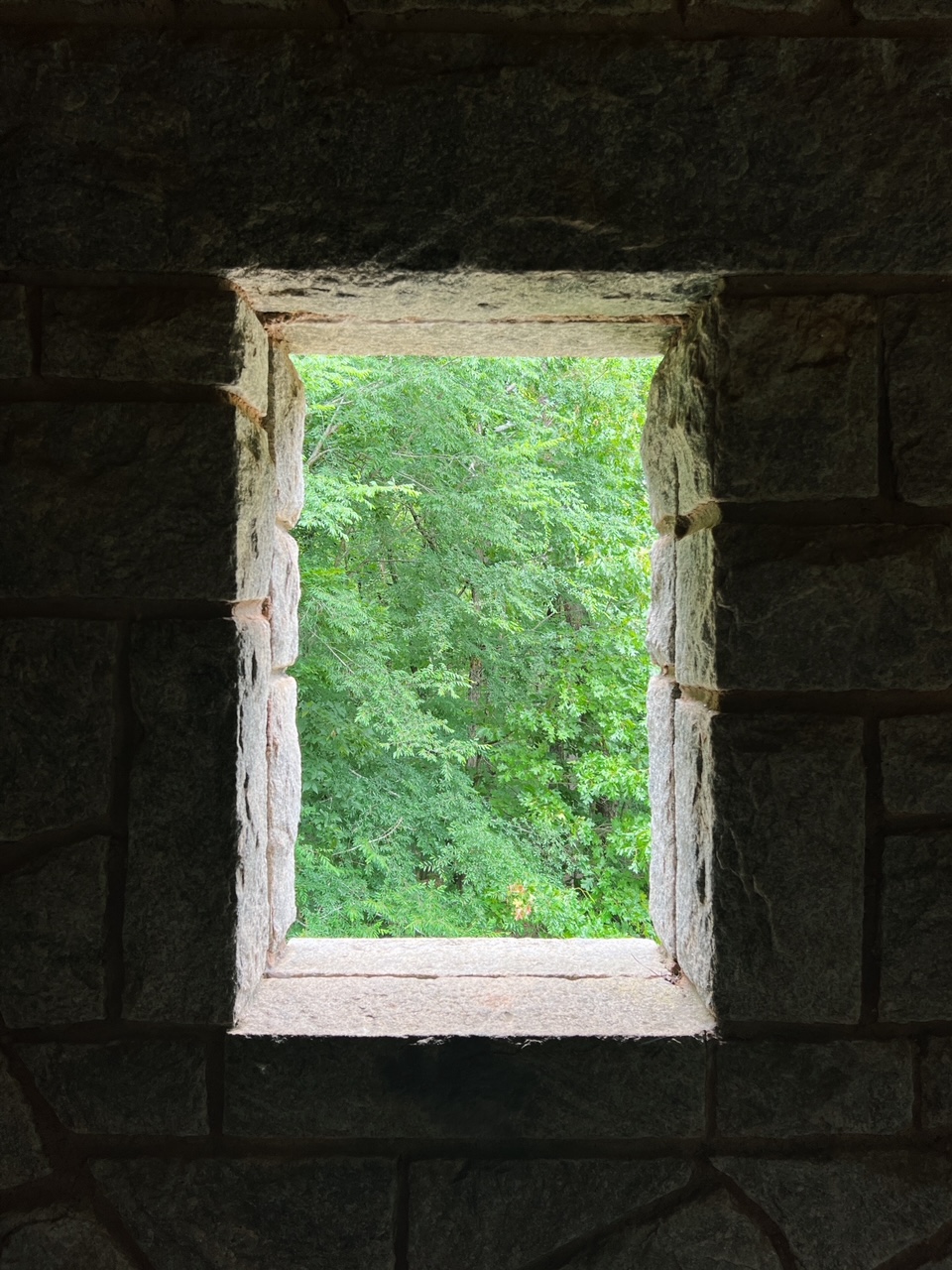
image: Ashley Beresch. Check out more of her work on Instagram @ashleyberesch
 Rejection Letters